

Your IT infrastructure faces a serious challenge this month. The latest November 2026 Patch Tuesday release addresses 1,259 vulnerabilities across your digital environment. This massive Microsoft security update demands immediate attention from security teams to maintain system integrity.
CVE-2026-124194 stands out as the most critical concern. Attackers already use these exploited CVEs to target vulnerable systems. Rapid deployment is essential for your defense strategy.
You must prioritize these Microsoft patches flaws to protect your hybrid cloud assets. Focus on high-risk items first to reduce your organization’s exposure to active threats. Staying ahead of these risks protects your ongoing operational security.
Key Takeaways
- The November 2026 release includes 1,259 individual security fixes.
- CVE-2026-124194 is currently being targeted by active attackers.
- Prioritize your deployment based on the severity of the identified risks.
- Hybrid environments require specific attention to cloud-based vulnerabilities.
- Immediate action is necessary to prevent unauthorized system access.
Microsoft Patches Flaws Across a Major Security Update
Reviewing 1,259 patched flaws requires a clear system maintenance plan. If your organization uses many software products, first understand the update’s full scope to maintain security.
The Scale of the 1,259-F law Disclosure
At first, 1,259 vulnerabilities may seem overwhelming. Yet 165 are republished non-Microsoft CVE identifiers. Separate these outside records from flaws affecting your internal technology stack.
Remove duplicate entries to focus on patches affecting your infrastructure. Precision in your review process saves time and helps your team address the most relevant threats first.
What Microsoft’s Security Release Covers
This large update covers critical products that may support your operations. It fixes flaws in Windows operating systems, Office suites, and database platforms like SQL Server.
The release also fixes SharePoint Server and several tools for developers. These products often connect, so one unpatched flaw can become a weak link in your digital architecture.
Why the Update Requires Immediate Review
Attackers may exploit these gaps in your defenses, making this release urgent. Effective cloud workload protection matters when vulnerable endpoints connect to hosted services. Those connections can provide entry points for malicious actors.
Integrating these patches into your broader threat detection and response strategy is essential. Prioritizing updates keeps your security posture resilient against changing risks in on-premises and hybrid environments.
Microsoft’s Exploited CVEs Create the Highest-Priority Risk
During a large patch release, vulnerabilities do not pose equal risks. A high CVSS score signals danger, but active exploitation shows an immediate threat to your environment.
How Microsoft Identifies Vulnerabilities Under Active Exploitation
Microsoft tracks global threat intelligence to see when a vulnerability becomes a weaponized threat. Telemetry can show successful unauthorized access or malicious code execution in the wild.
After confirming attackers use a flaw, Microsoft flags it in its security advisories. This signal helps your team rank those patches above all others.
Why Exploited CVEs Should Move Ahead of Lower-Risk Defects
Patching by severity score alone can leave your most exposed systems vulnerable. A flaw under attack gives attackers a proven path into your network.
Focusing on active threats removes the most dangerous tools from an attacker’s arsenal. It directs limited resources toward the most immediate protection.
What You Need to Confirm in Microsoft’s Individual Advisories
Each advisory gives details to help you assess risks within your infrastructure. Look beyond the headline and review each flaw’s technical requirements.
Attack Vector, Authentication Requirements, and Privilege Impact
Check whether the flaw needs local access or works remotely over the network. Determine whether attackers need valid credentials or can bypass authentication.
The privilege impact also matters. A flaw that grants an attacker administrative control requires top-tier emergency action.
Known Exploitation, Public Proof of Concept, and Mitigation Status
Check whether a public proof of concept exists; it can help less skilled attackers. Also check for temporary workarounds or mitigations when you cannot deploy a full patch immediately.
Endpoint patching differs from cloud governance tasks. As you address these flaws, protect your broader security posture with regular iam policy analysis for least privilege. Consistent iam misconfiguration scanning also supports a secure cloud environment and strengthens endpoint defense.
What the Patched Vulnerabilities Could Mean for Windows Systems
When Microsoft releases a massive batch of patches, the challenge is understanding what these flaws do to systems. Understanding these vulnerabilities is essential for prioritizing your response and protecting digital assets from sophisticated threats.
Remote Code Execution and Initial Access Concerns
Remote Code Execution (RCE) remains the most dangerous category in this update. These flaws let attackers run malicious code on your machine without physical access or prior authorization.
For instance, vulnerabilities in email clients like Outlook often need network connectivity and specific user interaction to trigger. Once triggered, an attacker might capture NTLMv2 material, which can be used for credential relay attacks or unauthorized impersonation across your network.
Privilege Escalation After an Attacker Gains a Foothold
Once attackers gain a foothold, they typically seek more control. Privilege escalation vulnerabilities let standard users or low-level processes gain administrative rights.
This transition is a critical phase in the attack lifecycle. By gaining higher permissions, intruders can disable security software, create new accounts, or move laterally to sensitive servers.
Information Disclosure, Security Feature Bypass, and Denial of Service
Beyond RCE and escalation, this update addresses flaws that leak sensitive data or disable security controls. Information disclosure vulnerabilities can expose memory contents, potentially revealing encryption keys or user credentials.
Security feature bypasses are equally concerning because they let attackers evade protections like firewalls or access controls. Meanwhile, Denial of Service (DoS) flaws can crash critical services, causing significant operational downtime for your business.
Why Internet-Facing Systems Deserve Early Attention
Internet-facing systems are primary targets for automated scanning and exploitation. Because anyone on the web can reach these assets, they need the fastest patching cycle to reduce attackers’ opportunity.
How Compromised Endpoints Can Affect Internal Networks
A single compromised endpoint can become a gateway to your entire internal infrastructure. After breaching a Windows machine, attackers often pivot toward cloud-connected workloads to expand their reach.
Deploying an aws security agent provides the visibility needed to track these movements in real time. Robust runtime threat detection helps security teams spot suspicious behavior, including unauthorized lateral movement or abnormal process execution. This can stop damage before it spreads to your cloud environment.
Who Needs to Act on the Microsoft Security Release
When Microsoft releases over a thousand patches, the right teams must guide deployment. This update is too large for one department to manage alone. Define roles clearly so every critical system gets attention without leaving security gaps.
Windows Workstations, Servers, and Domain Controllers
Your infrastructure team must patch domain controllers and core servers first. These systems support your network and attract attackers seeking lateral movement. Update workstations quickly to stop attackers from using them as entry points.
Organizations Running Microsoft 365 and Hybrid Environments
Hybrid setups create special challenges and need one security plan. Harden cloud-connected accounts with iam least privilege to limit damage from a compromise. With least privilege access, a compromised endpoint cannot automatically reach sensitive cloud resources or administrative consoles.
Managed Service Providers and Security Operations Teams
Managed Service Providers (MSPs) often patch several clients at the same time. These teams must work with internal security operations centers to confirm every patch works across different environments. Clear communication helps prevent configuration drift during deployment.
“Security is not a product, but a process of continuous coordination and vigilance across every layer of the enterprise.”
Responsibilities for Asset Owners and Patch Administrators
Asset owners identify mission-critical systems that need immediate testing. Patch administrators deploy updates and monitor system stability. This division of labor keeps accountability high throughout the update cycle.
Coordination Between IT, Security, and Incident Response
Effective patching requires close communication between IT operations and security teams. If incident response detects suspicious activity, it must alert patch administrators so they can speed up fixes. The table below shows each stakeholder group’s main responsibility.
| Stakeholder Group | Primary Responsibility | Key Focus Area |
|---|---|---|
| IT Operations | Deployment and Testing | System Uptime |
| Security Team | Risk Assessment | Vulnerability Prioritization |
| Asset Owners | System Validation | Business Continuity |
| Incident Response | Threat Monitoring | Evidence of Compromise |
By maintaining least privilege access across your network, you limit damage even when a patch is delayed. Remember, iam least privilege is your strongest defense against unauthorized lateral movement during the patching window.
How to Prioritize the 1,259 Microsoft Fixes
Managing 1,259 patches requires focus on real-world risk, not severity scores alone. CVSS numbers can mislead, as the recent Outlook vulnerability showed. Although its moderate score was 6.5, attackers exploited it, making it more dangerous than many “critical” flaws.
Your security posture management strategy must look beyond the base score. Combine threat intelligence with internal environment data to find systems facing the highest attack probability.
Rank Exploited Vulnerabilities Before Routine Patch Items
Always place vulnerabilities with known active exploits at the top of your deployment queue. They pose an immediate threat to your organization. Routine patches support long-term health but should not delay fixing an active breach vector.
Match Severity Against Exposure and Business Criticality
Effective compliance monitoring requires you to compare a flaw’s severity with the affected asset’s importance. A critical flaw on an isolated test server may be less urgent than a medium-risk flaw on a public-facing server. You must assess the possible business impact before scheduling maintenance windows.
Use Asset Inventory Data to Find Unpatched Systems
You cannot protect what you cannot see. An accurate asset inventory forms the foundation of successful patching. Use it to map vulnerabilities to specific hardware and software versions across your network.
Internet Exposure, Privileged Access, and Sensitive Data
Prioritize systems directly reachable from the internet because automated scanning tools target them first. Servers holding sensitive data or providing administrative access also need immediate attention. Attackers target these valuable assets to escalate privileges or exfiltrate information.
Unsupported Software, Legacy Systems, and Compensating Controls
Legacy systems often lack modern security features, making them vulnerable to current attack techniques. If you cannot patch one immediately, use compensating controls such as network segmentation or enhanced logging. These measures provide a temporary shield while you plan a permanent fix or system retirement.
| Risk Level | Priority Action | Target Timeline |
|---|---|---|
| Critical (Exploited) | Immediate Patching | Within 24-48 Hours |
| High (Internet-Facing) | Urgent Deployment | Within 7 Days |
| Medium (Internal) | Standard Cycle | Within 30 Days |
| Low (Isolated) | Routine Maintenance | Next Scheduled Window |
Testing and Deploying the Patches Without Losing Visibility
Protecting infrastructure from vulnerabilities takes more than clicking install; it requires a strategic approach to testing. You must ensure security updates do not disrupt critical business services during deployment. A structured process helps maintain high security standards without sacrificing operational uptime.
Validate Updates in Representative Test Environments
Before sending patches to production, test them in a sandbox that mirrors your actual setup. For example, when patching Windows Server instances that support Exchange, include similar configurations and dependencies. Representative testing helps find conflicts before they affect live users.
Use Phased Deployment for Critical Windows Infrastructure
Avoid deploying updates across your entire fleet at once. Instead, use a phased rollout that starts with non-critical systems before core infrastructure. This method helps catch issues early and limits possible service interruptions.
Monitor Reboots, Application Compatibility, and Failed Installs
After deployment, monitor systems to maintain their health. Watch reboot cycles closely, and confirm that core applications still work after the update. If a patch makes a service hang or fail, find the root cause quickly to prevent widespread outages.
Document Exceptions and Set Remediation Deadlines
Some systems cannot be patched immediately because of legacy software or specific business requirements. When this happens, document the exceptions clearly and set a firm deadline for future remediation. This keeps temporary security gaps from becoming permanent vulnerabilities.
Confirm Successful Installation Through Endpoint Reporting
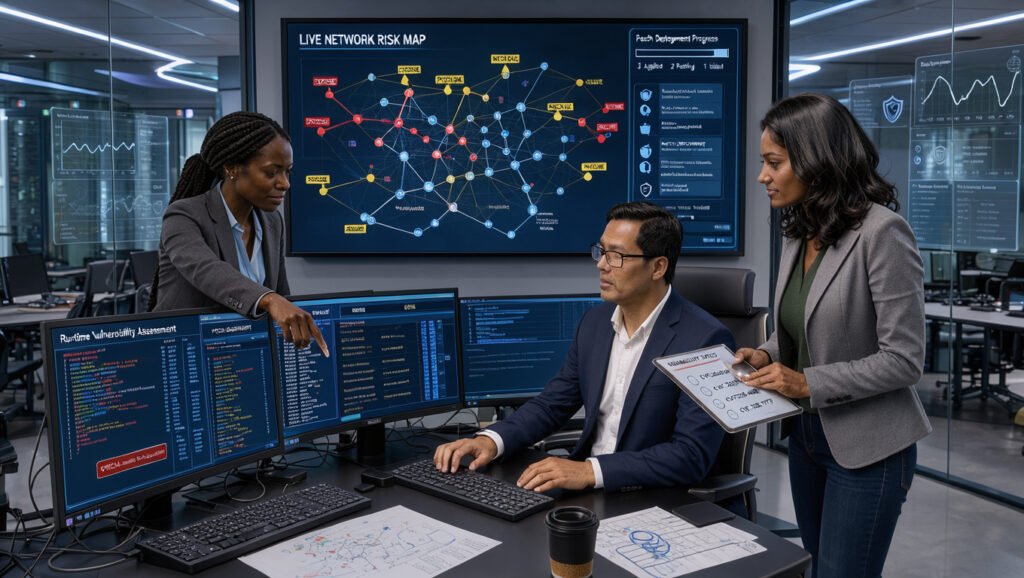
After deployment ends, verify that patches were applied correctly across all target assets. Use runtime vulnerability assessment tools to improve visibility and check system status. Adding runtime vulnerability scanning to your workflow confirms exposed workloads are fully protected and no vulnerable software remains active.
Indicators That an Exploited Vulnerability May Already Be Abused
Before applying patches, determine whether your environment is already compromised. A security incident investigation should come first, so you do not lock the door after an intruder enters.
Endpoint and Identity Signals to Investigate
Review identity logs first for signs of unusual authentication patterns. Look for several failed login attempts followed by success, or logins at odd hours from unexpected locations.
Check your email infrastructure for unusual activity. Unexpected Outlook rules or mass message deletions may show an attacker hiding tracks or moving through your organization.
Suspicious Processes, Logons, and Network Connections
Monitor endpoints for unauthorized processes with elevated privileges. Watch for NTLMv2 relay attempts or unexpected impersonation that differs from your normal baseline.
Analyze network traffic for suspicious outbound connections. Attackers often create command-and-control channels with external servers. Review firewall and proxy logs for irregular data spikes that may reveal these channels.
Microsoft and Third-Party Telemetry for Threat Detection and Response
Effective defense requires one clear view of your environment. Integrating Microsoft telemetry with existing security tools can reveal threats across your infrastructure.
Modern incident response automation tools can combine these data points. This helps your team find patterns hidden by the noise of daily operations.
Event Correlation Across Windows Logs and Security Platforms
Correlation turns raw data into useful intelligence. Map Windows event logs against alerts from third-party security platforms. Look for coinciding anomalies that suggest a coordinated attack.
This process separates routine system errors from malicious intent. When several indicators align, act immediately to contain the threat.
When to Escalate From Patch Management to Security Incident Investigation
Standard maintenance ends when emergency response begins. If you find unauthorized access or lateral movement, begin a formal security incident investigation immediately.
During this phase, incident response automation can help isolate affected systems quickly. Do not wait for a full-scale breach before escalating your response to protect critical assets.
Connecting Windows Patching With Cloud Workload Protection
When Windows servers connect to cloud resources, your security perimeter extends beyond the physical data center. An unpatched local machine can give attackers a path into your cloud infrastructure. Your fixes must match the wider view provided by your cloud service provider.
Why Hybrid Environments Extend the Impact of a Windows Compromise
In hybrid environments, Windows identities and servers often have permissions in your cloud environment. If attackers control a workstation, they may steal credentials for sensitive cloud storage or management consoles. This lateral movement turns a standard endpoint issue into a critical cloud security event.
Treat your patching schedule as a foundation of your cloud defense strategy. Updates fix the first flaw, while cloud tools detect attackers who bypass your perimeter. Visibility is your best defense against sophisticated threats.
Using an AWS Security Agent for Workload Visibility
Security agents on Windows instances inspect runtime behavior in detail. They monitor system calls, file integrity, and network traffic for unusual activity that standard logs might miss. Sending this data to one platform gives you a complete view of your hybrid footprint.
- Real-time monitoring of process execution and memory usage.
- Automated alerts for unauthorized configuration changes.
- Unified reporting across both on-premises and cloud-hosted assets.
Cloud Controls That Support Threat Detection and Response
Cloud-native controls protect your environment while patching remains in progress. These services monitor activity and detect signs that attackers exploited a known vulnerability.
Amazon GuardDuty and AWS GuardDuty Findings
Amazon GuardDuty is a managed threat detection service that continuously monitors for malicious activity and unauthorized behavior. By analyzing VPC Flow Logs and DNS logs, AWS GuardDuty can identify unusual patterns, such as communication with command-and-control servers. When a threat is detected, AWS GuardDuty findings provide actionable intelligence, allowing your team to isolate compromised instances immediately.
AWS Security Hub, CloudTrail Monitoring, and Incident Response Automation
AWS Security Hub combines security alerts from many sources into one view of your environment. Pair it with CloudTrail to track every API call in your account. Automation can trigger isolation scripts when a high-severity alert appears.
Amazon Inspector, Runtime Vulnerability Assessment, and Container Image Scanning
Amazon Inspector provides automated vulnerability management by scanning EC2 instances and container images for software flaws. It shows which workloads run outdated Windows versions or vulnerable applications. This proactive assessment helps harden your environment instead of only reacting to patches.
Identity and Runtime Controls That Reduce Post-Compromise Damage
You can reduce a breach’s impact by using strong identity and runtime controls. Although patching vulnerabilities matters, these layers provide a safety net when attackers bypass initial defenses. By controlling how users and services interact with your cloud environment, you limit lateral movement.
Apply IAM Least Privilege Across Connected Cloud Accounts
Least privilege is a strong defense against unauthorized access. Give each human or machine identity only the permissions needed for its work. Restricted access keeps attackers from using stolen credentials to gain privileges across your cloud footprint.
Consistent cloudtrail monitoring gives you the visibility needed to audit these permissions. When you track every API call, you can identify over-privileged accounts or behavior that differs from standard operational patterns.
Use IAM Policy Analysis and IAM Misconfiguration Scanning
Static policies can hide dangerous gaps that attackers exploit to gain persistence. Run automated policy analysis often to find overly permissive roles and dangerous trust relationships. This proactive step helps you close security holes before malicious actors discover them.
Specialized tools can scan for misconfigurations and protect your identity perimeter. Continuous assessment is vital because cloud environments change rapidly, often causing “permission creep” that weakens your overall security posture.
Combine Runtime Behavior Monitoring With Runtime Threat Detection
Static defenses cannot stop every modern threat that operates in memory or uses legitimate tools for malicious purposes. Combine runtime behavior monitoring with active threat detection to spot real-time anomalies. This helps your security team respond before incidents cause data exfiltration or system destruction.
Runtime Vulnerability Scanning for Cloud Workloads
Your strategy should include amazon inspector to automate software vulnerability discovery across your EC2 instances and containerized applications. By adding container image scanning to your CI/CD pipeline, you ensure that only secure code reaches your production environment. This keeps known flaws from becoming entry points for attackers.
Security Posture Management and Compliance Monitoring
Centralizing your security data is critical for a clear view of your environment. Using aws security hub, you can combine findings from multiple services in one dashboard. This visibility supports compliance and helps you prioritize remediation based on actual business risk.
Limiting Least Privilege Access During Incident Containment
When you detect a compromise, your immediate goal is to contain the threat. Prepare procedures to instantly revoke or restrict access for affected identities. Isolating the compromised segment blocks access to sensitive data or critical infrastructure during your root-cause investigation.
| Security Control | Primary Benefit | Tool/Service |
|---|---|---|
| Identity Management | Limits lateral movement | IAM Policies |
| Vulnerability Discovery | Finds software flaws | Amazon Inspector |
| Activity Auditing | Detects unauthorized calls | CloudTrail Monitoring |
| Centralized Visibility | Unified risk reporting | AWS Security Hub |
What Your Security Team Should Do After Reviewing the Update
After reviewing the latest Microsoft security update, focus on a precise remediation strategy. Prioritization guides effective defense, especially when you face over a thousand potential flaws. Move quickly to secure vulnerable assets before attackers exploit the disclosed weaknesses.
Build a Patch Triage List for Exploited and Internet-Facing Systems
Start by finding systems at the highest risk. Focus on internet-facing servers and workstations that external actors may target. Exploited vulnerabilities belong at the top of your triage list because they threaten your environment now.
Create a clear schedule showing which systems need immediate attention. Group assets by exposure level so your team fixes the most dangerous gaps first. This plan keeps critical systems protected during deployment.
Check for Evidence of Compromise Before and After Deployment
Before applying patches, scan your systems for signs of a breach. Look for unauthorized access or unusual activity that could show an attacker inside your network. Consistency matters because you must repeat these checks after installation.
Apply Temporary Mitigations When Immediate Patching Is Not Possible
Sometimes, compatibility concerns or operational needs prevent immediate patching. Then, use temporary controls to reduce your attack surface. These measures provide protection until you can safely deploy a permanent fix.
Isolate Vulnerable Hosts and Restrict Unnecessary Network Access
If a system remains unpatched, isolate it from the network to prevent lateral movement. Close unused ports and limit communication to essential services. This containment lowers the risk of a successful exploit.
Rotate Credentials and Review Privileged Account Activity
Attackers often target privileged accounts to gain deeper control of your infrastructure. Rotate credentials for administrative accounts that may have faced a vulnerability. Review logs for suspicious activity, including unauthorized logins or unexpected privilege escalations.
Preserve Logs for Detection, Investigation, and Reporting
Keep detailed logs of security events to support your long-term threat detection and response capabilities. These records support forensic investigations if a breach occurs. Continuous runtime behavior monitoring also helps your team spot persistent threats after patching.
| Mitigation Strategy | Primary Goal | Implementation Priority |
|---|---|---|
| Network Segmentation | Limit Lateral Movement | High |
| Credential Rotation | Prevent Unauthorized Access | High |
| Log Preservation | Forensic Readiness | Medium |
| Port Restriction | Reduce Attack Surface | High |
Conclusion
Managing 1,259 fixes requires a strategic plan, not a frantic rush to install every update at once. Use a risk-based response to protect your environment effectively.
Prioritize CVE-2026-124194 immediately; attackers actively target it, and CISA lists it in the Known Exploited Vulnerabilities catalog. It lets Outlook disclose an NTLMv2 hash when a user opens a crafted message file. Addressing these exploited CVEs builds a resilient security posture.
Effective Windows patch management involves more than clicking install. Verify endpoint health and investigate your systems for signs of prior compromise. Least-privilege cloud controls across connected environments provide an essential defense layer.
Microsoft patches flaws at a rapid pace, but your diligence remains the best safety tool. Keep teams informed and systems updated to stay ahead of evolving digital risks.
